
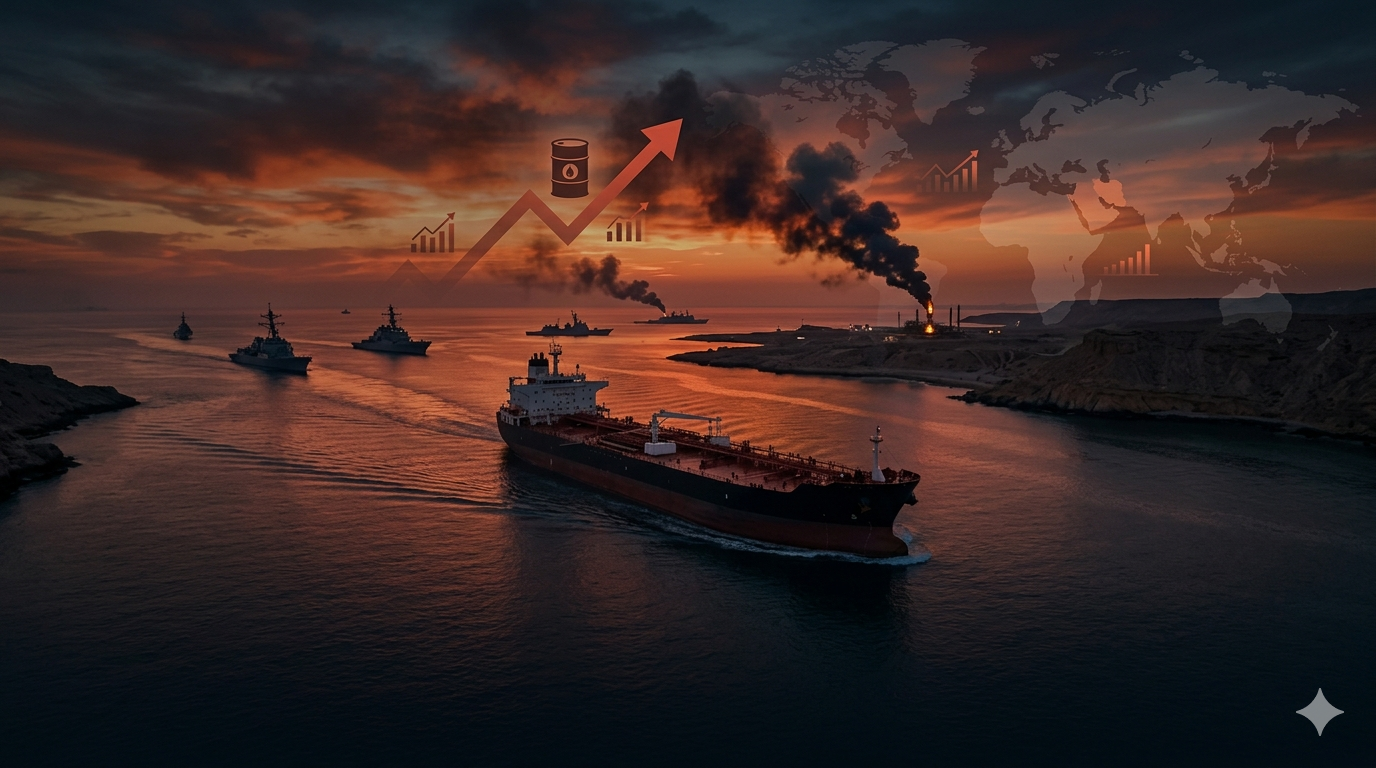
Oil Prices, Inflation & Energy Crisis: How the Iran War and Hormuz Blockade Are Hurting the World Economy
I remember the last big oil shock back in 2022 — petrol queues, nervous governments, and families cutting back on everything from groceries to weekend drives. What we’re seeing in April 2026 feels even more serious. The conflict between Iran, the US, and Israel has turned the Strait of Hormuz — a narrow waterway most people have never heard of — into the centre of a global economic storm.
Roughly 20% of the world’s oil supply normally flows through this chokepoint. When shipping slows or stops, the effects don’t stay in the Middle East. They reach petrol pumps in Karachi, factory floors in China, and kitchen tables in Europe within weeks.
Right now, tanker traffic through the strait has dropped dramatically. Gulf producers have cut output, storage is filling up, and prices have swung wildly. Brent crude has hovered near or above $100 per barrel at times, with sharp drops when Iran briefly signalled the route was open, only to tighten controls again.
This isn’t just about oil. It’s about higher costs for moving goods, making fertiliser, generating electricity, and running businesses. For ordinary people, that translates into costlier fuel, rising food prices, and tighter budgets.
Why the Strait of Hormuz Matters So Much

The Strait of Hormuz sits between Iran and Oman, connecting the Persian Gulf to the Arabian Sea. Every day before the conflict, around 20 million barrels of crude oil and petroleum products passed through it — mostly heading to Asia.
China alone takes nearly 38% of those exports. India, Japan, South Korea, and Southeast Asian nations also rely heavily on this route. When Iran imposed restrictions and the US maintained its naval presence near Iranian ports, commercial shipping became risky and expensive. Some tankers were reportedly targeted, insurance costs soared, and many vessels simply stayed away.
Alternative routes exist but are limited. Pipelines from Saudi Arabia and the UAE to the Red Sea or Indian Ocean can only handle a fraction of the volume. That leaves the world short on supply almost overnight.
Gulf countries responded by reducing production by millions of barrels per day. The International Energy Agency has called this one of the largest supply disruptions in oil market history.
Damage Beyond the Waterway: Infrastructure Under Fire
The problem goes deeper than blocked shipping lanes. Missile and drone strikes have hit energy facilities across the region.
In Saudi Arabia, refineries like Ras Tanura and facilities at Khurais and Manifa suffered damage. The UAE saw fires at major sites including Ruwais. Qatar’s Ras Laffan LNG complex and Iran’s South Pars gas field also took hits. Pipelines, ports, and gas-processing plants have been disrupted or forced offline.
Repairing this kind of damage takes months or even years. Even if shipping resumes fully tomorrow, some production capacity will stay offline for a while. That keeps upward pressure on prices and creates uncertainty for buyers everywhere.
How Rising Oil Prices Translate into Everyday Inflation
When crude oil gets expensive, the cost ripples through the entire economy.
Transport is the most visible part. Trucking, shipping, and aviation fuel prices climb, which raises the cost of moving food, raw materials, and finished goods. Supermarket prices for basics like rice, wheat, vegetables, and cooking oil start edging up.
Fertiliser production depends heavily on natural gas. With LNG supplies from Qatar and the UAE also affected, fertiliser costs have jumped in many markets. Farmers face higher input costs, which eventually show up in higher food prices.
Power generation is another channel. Countries that use oil or gas for electricity see higher utility bills. Industries with energy-intensive processes — steel, cement, chemicals, textiles — pass those costs on to consumers.
Central banks are watching closely. The IMF has already revised global inflation forecasts higher because of these energy shocks. In import-dependent economies, the effect feels like a sudden tax on daily life.
The Heavy Toll on Asia-Pacific Countries
Asia is feeling this crisis more than most regions. Around 80% of the oil that normally moves through Hormuz is destined for Asian markets.
China, India, Japan, South Korea, and Southeast Asian nations are scrambling. Some countries have started tapping strategic reserves earlier than planned. Others are looking for alternative suppliers — Russian oil, for example — but logistics and sanctions complicate those moves.
In India and Pakistan, petrol and diesel prices have already risen at the pump. Truck drivers report higher operating costs, which pushes up freight rates for everything from vegetables to construction materials.
Manufacturing hubs in Vietnam, Thailand, and Indonesia are seeing higher production expenses. Export competitiveness suffers when energy bills climb.
Even countries with some domestic production aren’t fully protected. Subsidies to keep fuel affordable are straining government budgets. In a prolonged scenario, those subsidies become harder to sustain, forcing tough choices between fiscal stability and protecting citizens.
The Asian Development Bank and UN estimates suggest that if disruptions continue, the region could lose tens to hundreds of billions in economic output, with millions more people pushed toward poverty due to higher living costs.
What a Prolonged Standoff Could Mean
If the current tensions drag on for months rather than weeks, the risks grow.
Analysts have modelled scenarios where Brent crude averages $100–$125 or even higher for extended periods. That kind of sustained price level could tip some economies toward slower growth or outright recession. Global growth forecasts have already been trimmed.
Stock markets hate uncertainty. Energy companies may benefit short-term, but airlines, shipping firms, and consumer-facing businesses face margin pressure. Currencies in oil-importing countries often weaken, making imports even more expensive.
On the positive side, higher prices encourage investment in alternatives — renewables, efficiency improvements, and new exploration. But those changes take years to deliver relief.
For now, the immediate concern is volatility. Prices can swing 5–10% in a single day based on a single statement from Tehran or Washington. That unpredictability makes planning difficult for businesses and governments alike.
How Ordinary People Are Already Feeling the Pinch
I’ve spoken with small business owners and families in recent weeks, and the stories are similar across countries.
A logistics operator in Lahore told me his monthly diesel bill has jumped by nearly 30%. He’s raising freight charges, but customers are pushing back, so margins are shrinking.
In Bangkok, a taxi driver said he now fills up more often and earns less after expenses. He’s considering switching to a more fuel-efficient vehicle, but the upfront cost is daunting.
Households everywhere are adjusting. People are combining trips, buying fewer imported goods, turning down air conditioners, and looking for cheaper local alternatives.
Governments in some countries have rolled out targeted subsidies or cash transfers for low-income families. Others are urging energy conservation — shorter school weeks in a few places, remote work encouragement, or limits on non-essential lighting.
These measures help in the short term, but they don’t solve the underlying supply problem.
What to Watch in the Coming Months
The situation remains fluid. Peace talks, including those hosted in Islamabad, offer some hope, but trust is low and deadlines keep shifting. Any breakthrough that allows normal shipping to resume would ease pressure quickly. On the other hand, further incidents in the strait or new strikes on infrastructure could push prices higher again.
Keep an eye on:
- Official statements from Iran, the US, and Gulf producers
- Weekly oil inventory reports and tanker tracking data
- Inflation numbers from major economies
- Strategic reserve releases by consuming nations
For businesses, now is the time to review energy contracts, hedge where possible, and explore efficiency gains. Individuals can focus on reducing unnecessary fuel use and building a small buffer for higher costs.
The world has navigated oil shocks before. Resilience comes from clear information, smart policy responses, and collective adjustments. This episode reminds us how connected global energy markets really are — and how quickly a conflict in one region can reach every corner of daily life.
FAQ
1. How much of the world’s oil really passes through the Strait of Hormuz? Normally around 20% of global oil supply (roughly 20 million barrels per day) transits the strait. Disruptions here create outsized effects because alternatives can’t quickly replace that volume.
2. Why has the Iran war caused such big swings in oil prices? Conflicting signals about whether the strait is open or restricted, combined with actual attacks on shipping and infrastructure, create fear of prolonged shortages. Markets price in both current disruptions and future risks.
3. Which countries are suffering the most from the Hormuz crisis? Asian import-dependent economies — especially China, India, Japan, South Korea, and parts of Southeast Asia — are hit hardest because they rely heavily on Middle Eastern oil routed through the strait.
4. Will petrol and diesel prices keep rising in the coming months? It depends on how quickly shipping resumes and whether more infrastructure damage occurs. Short-term volatility is likely, with potential relief if a stable ceasefire holds and flows return to normal.
5. What can governments do to protect citizens from these energy shocks? Options include releasing strategic reserves, targeted subsidies for vulnerable groups, promoting energy efficiency, and accelerating investment in alternative sources. Long-term, diversifying import routes and building bigger buffers helps.
The coming weeks will be critical. While the headlines focus on geopolitics and military moves, the quieter story is how families and businesses everywhere are adapting to higher costs and uncertainty. Staying informed and making practical adjustments can help soften the blow until stability returns.
If you found this helpful, feel free to share your own experiences with rising fuel or living costs in the comments — it helps everyone understand the real-world impact better. Stay safe out there.